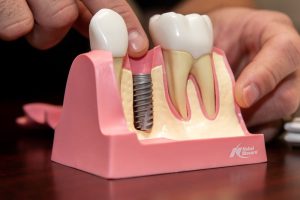


A dental implant replaces the root of a missing tooth, but the implant itself is only one part of the complete restoration. After the implant has successfully integrated with the jawbone, it needs a custom restoration to recreate the visible portion of the tooth.
For many patients replacing a single missing tooth, that final restoration is an implant crown.
At JP Prosthodontics in Fullerton, CA, the crown is planned as part of the overall implant treatment—not as an afterthought. The goal is to create a restoration that works comfortably with the surrounding teeth, fits the bite, and looks natural.
What Is a Dental Implant Crown?
A dental implant crown is a custom-made tooth restoration attached to a dental implant.
A complete implant-supported tooth generally consists of three components:
- Dental implant: The post that replaces the missing tooth root.
- Abutment: The connector between the implant and crown.
- Crown: The visible restoration designed to resemble a natural tooth.
The implant is placed into the jawbone, while the crown sits above the gumline. The dental implants page provides an overview of how implants are used to replace missing teeth.
Why Does the Crown Need to Be Custom Designed?
No two mouths are exactly alike. The shape, size, position, and color of each tooth must work with the surrounding dentition.
A custom implant crown considers:
- The position of neighboring teeth
- Gum contours
- Bite relationships
- Tooth proportions
- Facial appearance
- Chewing forces
- The location of the implant
This is particularly important for front teeth, where small differences in shape and position can be noticeable when smiling.
When Is the Crown Placed?
Implant treatment typically occurs in stages.
Step 1: Implant Placement
The dental implant is surgically placed into the jawbone.
Step 2: Healing and Integration
The implant is allowed time to integrate with the surrounding bone. This process, known as osseointegration, provides the foundation for the final restoration.
Step 3: Abutment and Impression or Digital Scan
Once the implant is ready for restoration, the dental team records the implant position and surrounding structures.
Depending on the case, this may involve a traditional impression or digital scanning.
Step 4: Crown Fabrication
The laboratory creates a custom crown based on the clinical information and treatment plan.
Step 5: Crown Placement
The completed crown is attached to the implant using the selected restorative connection.
The bite and contacts with neighboring teeth are checked carefully before the restoration is considered complete.
What Materials Are Used for Implant Crowns?
Several materials can be used for implant crowns. The appropriate choice depends on the location of the tooth, functional requirements, aesthetics, and other clinical considerations.
Common materials include:
- Zirconia
- Porcelain
- Ceramic-based restorations
- Porcelain fused to metal in selected situations
Zirconia is frequently used when strength and aesthetics are both important.
For more extensive implant restorations, JP Prosthodontics also provides zirconia fixed bridges.
Implant Crowns vs. Traditional Dental Bridges
A single missing tooth can potentially be replaced with either an implant crown or a traditional bridge.
An implant crown:
- Replaces the missing root with an implant
- Does not require preparing adjacent healthy teeth for support
- Provides an independent restoration
- Helps maintain stimulation of the jawbone around the implant
A traditional bridge:
- Uses neighboring teeth for support
- Requires those supporting teeth to be prepared
- Does not replace the missing tooth root
- May be appropriate in certain clinical situations
The best option depends on the condition of the surrounding teeth, bone, gums, bite, and overall treatment goals.
How Does an Implant Crown Feel?
Once properly restored and adjusted, an implant crown should feel stable during normal chewing.
Unlike a removable denture, an implant crown is fixed in place.
Patients may initially notice that the new tooth feels different from their natural teeth. The tongue and surrounding tissues generally adapt as the patient becomes accustomed to the restoration.
The bite is also carefully adjusted so the crown functions appropriately with the rest of the dentition.
Caring for an Implant Crown
Implant crowns require regular oral hygiene.
Daily care generally includes:
- Brushing twice daily
- Cleaning between teeth
- Cleaning carefully around the gumline
- Following individualized flossing recommendations
- Attending regular dental examinations
Although the crown itself cannot develop a cavity, plaque and bacteria can affect the gums and bone around the implant.
This makes long-term maintenance important.
Can an Implant Crown Break or Wear Down?
Implant crowns are durable, but no dental restoration is indestructible.
Potential complications can include:
- Chipping
- Fracturing
- Wear
- Loosening of restorative components
- Changes in bite
- Damage associated with excessive grinding or clenching
Patients who grind or clench their teeth may require additional protective measures.
Regular examinations allow the dental team to identify excessive wear or bite changes before they become more significant problems.
What Happens If the Implant Crown Becomes Loose?
A loose implant crown should not be ignored.
The crown or another restorative component may be loose even though the implant itself remains stable.
Possible causes include:
- A loose screw
- Wear of restorative components
- Changes in the bite
- Damage to the restoration
A dental professional should determine the source of the problem before treatment is performed.
Avoid attempting to permanently repair or reattach an implant crown yourself.
How Long Can an Implant Crown Last?
The lifespan of an implant crown varies depending on factors such as:
- Oral hygiene
- Bite forces
- Grinding or clenching
- Material selection
- Restoration design
- General oral health
- Professional maintenance
The implant and crown should be considered separate components. The implant may remain stable for many years while the crown eventually requires repair or replacement because of normal wear.
Regular maintenance helps monitor both.
Why Prosthodontic Planning Matters
Replacing a missing tooth involves more than inserting an implant and placing a crown on top of it.
The final restoration must work with:
- The patient’s bite
- Neighboring teeth
- Opposing teeth
- Gum contours
- Facial appearance
- Chewing forces
A prosthodontic approach considers these relationships from the beginning.
Dr. Joon W. Park, DMD provides comprehensive restorative and implant treatment planning at JP Prosthodontics. His doctor profile provides more information about his prosthodontic background.
When an Implant Crown May Not Be the Immediate Next Step
Not every patient can proceed directly from tooth loss to an implant crown.
Additional treatment may be necessary when there is:
- Insufficient bone
- Active gum disease
- Infection
- Significant bite problems
- Inadequate space
- Compromised neighboring teeth
Bone grafting or other preparatory procedures may sometimes be required before implant placement.
A comprehensive examination determines the appropriate sequence.
Implant Crowns for Front Teeth
Replacing a front tooth requires additional attention to aesthetics.
The restoration must complement:
- Tooth color
- Tooth shape
- Gum position
- Neighboring teeth
- Smile line
- Facial proportions
The crown should not only function properly but also integrate visually with the surrounding smile.
Digital planning can help evaluate the proposed restoration before treatment is completed. JP Prosthodontics also offers Digital Smile Design as part of its broader approach to aesthetic treatment planning.
When to Contact Your Prosthodontist
Contact your dental provider if you notice:
- A loose crown
- Cracks or chips
- Persistent discomfort
- Bleeding around the implant
- Swelling
- Changes in your bite
- Difficulty chewing
- A crown that feels different from before
Early evaluation can help identify whether the issue involves the crown, abutment, implant, gums, or bite.
Final Thoughts
A dental implant is only the foundation of an implant-supported tooth. The implant crown completes the restoration by replacing the visible portion of the missing tooth.
Successful results depend on careful planning, appropriate material selection, precise restorative design, proper bite management, and consistent maintenance.
For patients considering an implant crown in Fullerton, CA, JP Prosthodontics provides comprehensive evaluation and prosthodontic treatment planning designed around both function and aesthetics.
Schedule an evaluation through the JP Prosthodontics contact page to discuss your tooth replacement options.