

When Patricia looked in the mirror after years of struggling with failing teeth, she barely recognized herself. At 58, she felt like she looked 75. Her dentist had told her she needed “something major,” but the options were confusing. Full mouth implants? Dentures? What was the actual difference? And how could she know which one was right for her?
Tooth loss changes more than your appearance. It affects how you chew your favorite foods, speak clearly in important conversations, and interact confidently with family, friends, and colleagues. For many Fullerton residents facing complete or near-complete tooth loss, the decision between full mouth dental implants and modern dentures feels overwhelming.
At JP Prosthodontics in Fullerton, CA, Dr. Joon Park — a specialist prosthodontist focused on advanced restorative and dental implants — guides patients through this exact decision every day. The choice is not always obvious, and the right answer depends on multiple factors including your bone health, medical status, lifestyle priorities, budget, and long-term goals.
This comprehensive guide explains both options in straightforward terms, compares them across key factors, and shows how a prosthodontist evaluates which solution fits your unique situation best.
What Full Mouth Dental Implants Are: The Fixed, “Permanent” Solution
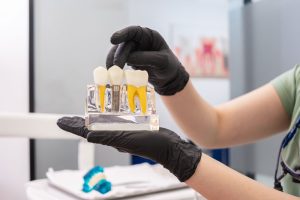
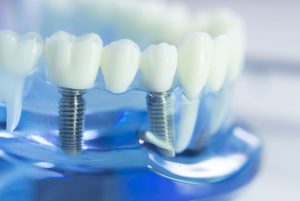
Full mouth dental implants represent the most advanced approach to complete tooth replacement available today. Instead of replacing each missing tooth with an individual implant, this approach uses a strategic number of implants as anchors to support an entire arch of replacement teeth.
How the concept works:
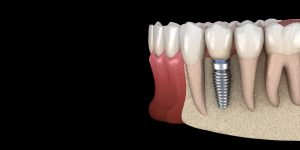
- Several dental implants (typically 4–6 per arch) are surgically placed into your jawbone at precise angles and positions.
- After a healing period, the bone fuses with the titanium implants (osseointegration).
- A custom-designed full arch bridge is securely attached to these implants.
Common full mouth implant approaches available in Fullerton:
- All-on-4 dental implants
- Four strategically positioned implants support a complete arch bridge.
- The back implants are angled to maximize contact with available bone and avoid anatomical structures like sinuses.
- All-on-6 (All-on-X) solutions
- Five, six, or more implants provide added stability when bone volume and quality allow.
- Forces are distributed more evenly across the implants.
- Zirconia implant bridge
- A solid, custom-milled bridge made of high-strength zirconia attached permanently to the implants.
- Delivers superior aesthetics and durability.
- Hybrid prostheses
- Combine different materials (such as titanium frameworks and acrylic or ceramic teeth) tailored to specific functional and aesthetic needs.
Key features of full mouth dental implants:
- Fixed in place and only removed by your dental team for maintenance
- High chewing power, approaching that of natural teeth
- Bone preservation through ongoing stimulation
- Highly customizable and natural-looking smile design
- Maintenance of facial support and natural facial structure
- Long-term solution with potential decades of service when properly cared for
For many patients seeking the best full mouth dental implants in Fullerton, this approach feels closest to getting their natural teeth back — functionally, socially, and psychologically.
What Modern Dentures Are: The Removable Alternative
Dentures are removable prosthetic teeth that rest on top of your gums and are held in place by suction (upper dentures), muscle control, and sometimes adhesives. They do not use implants for support, but modern materials, digital design, and improved fabrication techniques have made today’s dentures far superior to older versions.
Common types of dentures available in Fullerton:
- Conventional full dentures
- Replace all teeth in the upper or lower arch after tissues have healed from extractions (usually 8–12 weeks).
- Rely primarily on suction and muscle control for retention.
- Immediate dentures
- Fabricated before extractions and placed the same day teeth are removed.
- Prevent you from being without teeth during healing.
- Require relining after healing as the tissue and bone reshape.
- Overdentures (implant-supported dentures)
- Snap onto 2–4 implants for significantly improved stability while remaining removable for cleaning.
- Represent a middle ground between traditional dentures and fully fixed implant bridges.
- Partial dentures
- Replace some (not all) teeth.
- Use clasps or precision attachments to connect to remaining natural teeth.
Benefits of dentures:
- Lower upfront cost compared to full mouth implants
- No surgical procedure required
- Quicker initial treatment timeline
- Viable option for patients with significant bone loss who are not candidates for implants without extensive grafting
- Can serve as a reasonable interim solution while saving for implants or during healing periods
Important limitations:
Because dentures sit on the gums rather than anchoring into bone, they cannot match the stability, comfort, biting force, or bone-preserving benefits of implant-supported restorations. This fundamental difference affects diet, confidence, and long-term facial structure.
Full Mouth Implants vs Dentures: Key Differences That Affect Daily Life
1. Stability and Comfort
Full mouth dental implants:
- Fixed permanently in place with no movement when speaking, laughing, or chewing
- No rubbing, shifting, or sore spots from prosthesis movement on the gums
- Feel similar to natural teeth once you adapt (often within a few weeks)
- No worry about teeth slipping during social or professional situations
- No adhesives or daily removal
Dentures:
- Rely on suction (upper), muscle control, ridge shape, and sometimes adhesives
- Lower dentures can feel loose, especially with significant bone loss
- May shift during eating or animated conversation
- Can create sore areas that require repeated adjustments
- Fit deteriorates over time as bone continues to shrink, requiring relines or remakes
2. Chewing Ability and Diet
Full mouth implants:
- Restore a high percentage of natural chewing force
- Allow you to eat virtually any food (steak, apples, corn on the cob, nuts, raw vegetables)
- Support efficient chewing on both sides at once
- Remove many dietary restrictions and food avoidance patterns
Dentures:
- Provide a fraction of natural chewing force
- Require smaller bites and slower chewing
- Make certain foods difficult or impossible (very hard, sticky, tough, or fibrous foods)
- Often lead to avoiding favorite foods out of frustration or embarrassment
- Can contribute to nutritional challenges over time due to limited food variety
3. Bone Health and Facial Support
Full mouth implants:
- Stimulate the jawbone by transmitting chewing forces directly into the bone
- Help slow or halt the bone resorption process that follows tooth loss
- Maintain facial support and prevent the “collapsed,” prematurely aged look
- Preserve the vertical dimension of the face (distance from nose to chin)
- Maintain proper lip support and overall facial contours
Dentures:
- Sit on top of the gums and provide no meaningful bone stimulation
- Bone continues to resorb progressively, especially in the first year after extractions
- Ongoing bone loss contributes to the classic “denture face” appearance
- Progressive bone shrinkage leads to worsening denture fit and retention over time
- In advanced cases, it can become difficult to achieve stable denture fit at all
4. Longevity and Maintenance
Full mouth implants:
- Titanium implants can last decades or even a lifetime with proper care
- The prosthetic bridge may need repair or replacement after 10–15 years depending on materials and wear
- Require daily brushing and the use of special floss, interdental tools, or water flossers
- Need professional maintenance and cleanings every 3–6 months
- Periodic X-rays monitor bone levels and implant health
Dentures:
- Acrylic teeth and bases stain, wear, and deteriorate over time
- Typically need relining every 1–2 years as bone resorbs and fit changes
- Often require complete replacement every 5–8 years
- Must be removed nightly for cleaning and to allow gum tissues to rest
- Require special cleaning solutions and careful handling to avoid breakage
- Periodic adjustments are needed for sore spots and bite changes
5. Treatment Timeline
Full mouth implants (typical sequence):
- Initial consultation, imaging (often CBCT), and treatment planning
- Any required extractions and bone grafting
- Implant surgery (sometimes with immediate temporary fixed teeth)
- Healing and osseointegration period (usually several months)
- Final prosthesis fabrication and delivery
Total timeline often ranges from a few months to under a year, depending on complexity and healing. Many patients have temporary teeth throughout treatment.
Dentures:
- Initial consultation and impressions
- Bite records and try-ins
- Final adjustments and delivery
- Follow-up adjustments as the mouth adapts
Total timeline often ranges from several weeks to a couple of months for conventional dentures after healing, or immediate delivery with immediate dentures.
6. Cost and Long-Term Value
Full mouth implants:
- Higher initial investment per arch due to surgery, advanced planning, and custom lab work
- Insurance coverage is often limited, though some plans contribute to parts of treatment
- Financing options are commonly available
- When viewed over a 20–30 year span, cost per year of use can be reasonable given function, comfort, and stability
Dentures:
- Significantly lower upfront cost, making treatment more immediately accessible
- Often partially covered by dental insurance
- Ongoing costs include relines, repairs, replacements, adhesives, and cleaning products
- Over time, cumulative costs may approach or narrow the gap with implant-based solutions
How a Prosthodontist Evaluates Your Case at JP Prosthodontics
JP Prosthodontics is led by Dr. Joon Park, a specialist prosthodontist who completed three additional years of advanced training after dental school, focusing on complex restorative and implant dentistry. The goal is not just to “put teeth in.” The goal is to restore function, aesthetics, bite relationships, and long-term oral health.
Comprehensive full mouth reconstruction assessment typically includes:
- Detailed oral examination of remaining teeth, gums, and soft tissues
- 3D cone beam CT scan to assess bone volume, density, and anatomy
- Digital photographs and impressions or scans for planning
- Bite analysis to understand how the jaws meet and distribute forces
- Review of medical history, medications, and healing capacity
- Discussion of your priorities: fixed vs removable, budget, timeline, and cosmetic goals
- Assessment of TMJ issues, grinding/clenching, or other bite problems
Possible treatment plans from this evaluation:
- Full arch reconstruction with All-on-4 or All-on-6 dental implants
- Zirconia implant bridges for maximum durability and aesthetics
- Combinations of implants, crowns, and bridges for partial tooth loss
- High-quality conventional dentures designed for optimal support and appearance
- Implant-supported overdentures as a middle-ground solution
- Staged plans that address urgent needs while working toward long-term goals
Because JP Prosthodontics offers both advanced implant options and expert prosthetic fabrication, recommendations are based on what actually fits your health, anatomy, and lifestyle — not on a one-size-fits-all protocol.
When Full Mouth Dental Implants Are Usually Preferred
You may be an ideal candidate for full mouth dental implants if:
- Long-term stability and chewing strength are top priorities
- You want a fixed solution that never comes out
- You have adequate bone volume or are open to bone grafting if needed
- You are medically suitable for oral surgery
- You want to minimize future bone loss and preserve facial structure
- Your budget allows for the higher initial investment, with or without financing
- You are committed to excellent home care and regular professional maintenance
Patients who choose implants often value the confidence of a secure, natural-feeling smile and the freedom to eat a full, varied diet.
When Dentures May Be the Better First Step
Dentures — conventional or implant-retained — may be the more appropriate choice when:
- Budget limits make full arch implants unrealistic right now
- Medical conditions or medications complicate oral surgery
- You prefer a non-surgical solution
- Severe bone loss would require extensive grafting you do not wish to pursue
- You need an immediate solution during healing before definitive treatment
- Your age or overall health makes a lower-cost, simpler treatment more practical
- You understand and accept the limitations of dentures in exchange for lower cost and quicker treatment
High-quality dentures designed by a prosthodontist can still provide an attractive appearance and functional bite, especially when the bite, tooth position, and facial support are carefully planned.
Transition paths:
- Some patients start with dentures and transition to implants later when circumstances change.
- Others choose implant-retained overdentures as a middle step, gaining much better stability with fewer implants than a full fixed bridge.
The Prosthodontic Advantage at JP Prosthodontics
What sets a prosthodontist apart:
- Three additional years of advanced training in prosthodontics and complex restorative dentistry
- Deep understanding of occlusion (bite), jaw mechanics, and facial aesthetics
- Experience with full mouth rehabilitation and difficult cases
- Expertise in both the surgical and restorative phases of implant-related care
- Access to advanced materials, techniques, and high-quality laboratories
The JP Prosthodontics approach:
- Detailed diagnosis and treatment planning, not rushed recommendations
- Customized design of teeth, gums, and bite for natural aesthetics and function
- Advanced options such as All-on-4, All-on-6, zirconia implant bridges, and overdentures
- Coordination of extractions, bone grafting, and staged reconstruction when needed
- Consistent precision whether treating a single tooth or a full mouth reconstruction
- Long-term maintenance protocols to protect your investment
Making Your Decision: Questions to Ask Yourself
Consider these points as you weigh your options:
Function and lifestyle:
- How important is it to eat without significant restrictions?
- Do you want a fixed solution, or are you comfortable with removable teeth?
- How much does daily removal and cleaning influence your preference?
Long-term health and appearance:
- Are you more focused on upfront cost or long-term value?
- How important is preserving jawbone and facial structure?
- Are you prepared to follow the maintenance routine that implants require?
Medical and practical realities:
- Do you have medical conditions that affect surgery or healing?
- Can you manage a longer treatment timeline if needed for implants?
- Is financing or staged treatment an option to make implants more accessible?
An honest discussion of these questions with your prosthodontist helps clarify the path that fits you best.
Take the First Step
Choosing between full mouth dental implants and dentures directly impacts your diet, confidence, appearance, and overall quality of life. There is no single “right” answer for everyone — only the right answer for your specific health, priorities, and circumstances.
At JP Prosthodontics in Fullerton, CA, Dr. Joon Park and the team use specialized training, advanced diagnostics, and personalized planning to guide you through this decision and design a solution that fits your needs. To talk through your options or schedule a consultation, visit the contact page.