

Full mouth reconstruction is a comprehensive dental treatment plan that restores the health, function, and appearance of severely damaged, worn, or missing teeth. It combines restorative dental procedures to help patients eat comfortably, improve their bite, and regain confidence in their smiles.
If you have several damaged teeth, failing extensive dental work, or missing teeth that affect your daily life, full mouth reconstruction may be an option worth exploring. A prosthodontist can evaluate your teeth, gums, bite, and jaw function to determine which treatments may best meet your needs.
What Does Full Mouth Reconstruction Include?
Full mouth reconstruction, also called full mouth rehabilitation, rebuilds or replaces multiple teeth to improve oral health and restore proper function. Treatment may address problems affecting most or all of the teeth in the upper jaw, lower jaw, or both.
Unlike a cosmetic smile makeover, which primarily focuses on appearance, full mouth reconstruction also addresses underlying dental problems. These may include damaged teeth, an unstable bite, advanced tooth wear, and missing teeth.
Depending on your condition, a treatment plan may include:
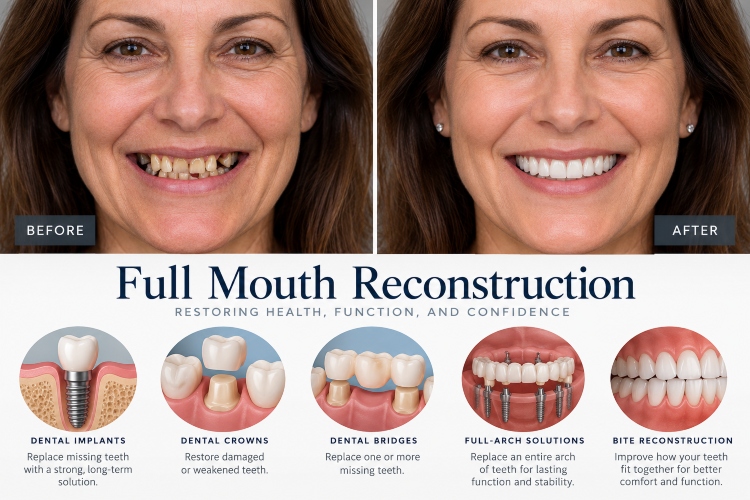
- Dental crowns: Restore weakened, broken, or severely worn teeth.
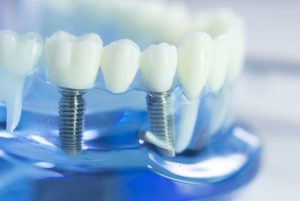
- Dental implants: Replace missing teeth with artificial tooth roots that support crowns, bridges, or dentures.
- Dental bridges: Replace one or more missing teeth by anchoring a restoration to supporting teeth or dental implants.
- Implant-supported dentures: Replace multiple missing teeth with dentures supported by implants.
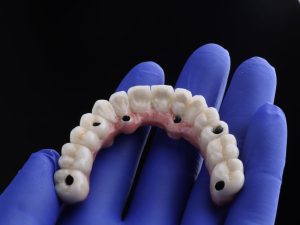
- Full-arch dental implants: Support a fixed or removable restoration that replaces an entire arch of teeth.
- Porcelain veneers: Improve the appearance of selected teeth when the remaining tooth structure and bite conditions make veneers appropriate.
- Bite reconstruction: Address problems with how the upper and lower teeth meet.
Who Needs Full Mouth Reconstruction?
Full mouth reconstruction may benefit patients with multiple dental problems that a single procedure can’t address effectively.
You may be a candidate if you have:
- Several broken, cracked, or severely damaged teeth.
- Extensive tooth wear caused by grinding or clenching.
- Multiple missing teeth that affect chewing or speaking.
- Old crowns, bridges, or other restorations that are failing.
- Significant bite problems that affect comfort or function.
- Extensive decay affecting several teeth.
- Existing dental restorations that need replacement or redesign.
- A combination of functional and cosmetic dental concerns.
How Does the Full Mouth Reconstruction Process Work?
Full mouth reconstruction begins with a comprehensive evaluation. Because multiple teeth and your bite may be involved, careful planning helps ensure each treatment stage supports the overall result.
1. Comprehensive Dental Examination
Your prosthodontist will examine your teeth, gums, existing restorations, and bite. Digital imaging and dental X-rays may be used to evaluate tooth roots, bone support, and other structures that a visual exam alone can’t assess.
2. Personalized Treatment Planning
After the evaluation, your prosthodontist will develop a treatment plan based on your specific needs.
This may involve determining which teeth can be preserved, which need crowns or other restorations, and which missing teeth should be replaced. If you’re considering dental implants, bone volume, gum health, and other factors will help determine whether implant placement is appropriate.
3. Preparing the Mouth for Treatment
Before placing definitive restorations, you may need to address underlying dental problems. This could include treating gum disease, removing decay, performing necessary extractions, or completing bone grafting when indicated.
Temporary restorations may be used during treatment to protect prepared teeth and help evaluate comfort, appearance, and bite function.
4. Restoring or Replacing Teeth
The next stage depends on your treatment plan. Your prosthodontist may place crowns on damaged teeth, restore dental implants, fit bridges, or provide implant-supported dentures.
Some patients can complete treatment relatively quickly, while others need several months or longer. The timeline depends on the number of procedures involved, healing requirements, and the case’s complexity.
5. Checking Your Bite and Long-Term Results
Before considering treatment complete, your prosthodontist will evaluate the restorations’ fit, how your teeth come together, and whether you can chew comfortably.
Follow-up visits help monitor the restorations and make adjustments as needed. You will also receive guidance on maintaining your new smile.
Is Full Mouth Reconstruction Painful?
Full mouth reconstruction should not cause significant pain during procedures because dentists use appropriate local anesthesia, and sedation may be available when appropriate. Some discomfort, swelling, or sensitivity can occur afterward, depending on the treatments performed.
A crown preparation may cause temporary sensitivity, while dental implant surgery or multiple extractions may require more recovery time. Your care team will explain what to expect and how to manage discomfort.
Because full mouth reconstruction can involve several procedures, treatment may be divided into stages to support healing and help you adjust to each step.
How Long Does Full Mouth Reconstruction Take?
Full mouth reconstruction can take several weeks to a year or longer, depending on the complexity of the treatment plan.
Patients receiving crowns or bridges on existing teeth may complete treatment faster than those who need extractions, bone grafting, and dental implants.
In many cases, dental implants need time to integrate with the surrounding bone before you can place the final restoration. Some patients may qualify for temporary teeth or immediate-load implant treatment, but this depends on individual clinical factors.
Your prosthodontist can provide a more accurate timeline after examining your mouth and determining which procedures are necessary.
How Much Does Full Mouth Reconstruction Cost?
The cost of full mouth reconstruction varies based on the number of teeth involved, your oral health, and the procedures required.
Factors that can affect the total cost include:
- The number and type of crowns, bridges, or other restorations.
- Whether dental implants are needed.
- Whether extractions or bone grafting are needed.
- The complexity of bite correction.
- The materials selected for your restorations.
- The number of treatment stages and follow-up visits.
Because every case is different, we need an examination to develop an individualized treatment estimate. Dental insurance may cover some medically necessary procedures, depending on your plan and benefits. Financing options may also help make treatment more manageable.
Ask your dental team for a written treatment plan outlining recommended procedures, estimated costs, and possible alternatives before you begin care.
How Long Does Full Mouth Reconstruction Last?
The longevity of full mouth reconstruction depends on the materials used, the condition of the supporting teeth and bone, your oral hygiene, and habits such as teeth grinding.
Crowns, bridges, and implant-supported restorations can last many years, but no restoration lasts forever. Some may eventually need repair or replacement.
To protect your investment:
- Brush twice daily with fluoride toothpaste.
- Clean between your teeth and around implant restorations every day.
- Attend regular dental examinations and professional cleanings.
- Wear a night guard if your dentist recommends one for grinding or clenching.
- Avoid using your teeth to open packages or bite hard objects.
- Contact your dentist if you notice changes in your bite, discomfort, or a loose restoration.
Why See a Prosthodontist for Full Mouth Reconstruction?
A prosthodontist is a dentist who completes additional specialty training focused on restoring and replacing missing or damaged teeth. Prosthodontists manage complex restorative cases involving dental implants, crowns, bridges, dentures, and bite reconstruction.
Full-mouth reconstruction often requires coordinating multiple treatments so the final restorations work together. This includes considering how the teeth fit together, how the jaw functions, and how the restorations will look and perform over time.
At J.P. Prosthodontics, Dr. Joon W. Park takes a personalized approach to complex restorative care. Patients from Fullerton and surrounding Orange County communities can explore treatment options based on their dental condition, functional needs, and smile goals.
The right treatment plan should preserve healthy tooth structure when possible, address underlying problems, and choose restorations that support long-term oral health.
Explore Full Mouth Reconstruction at J.P. Prosthodontics
Damaged, worn, or missing teeth can make eating, speaking, and smiling more difficult. Full mouth reconstruction offers a coordinated approach to addressing multiple dental concerns and restoring a more functional, comfortable smile.
The first step is understanding your teeth’s condition and identifying the treatments that make sense for you.
Contact J.P. Prosthodontics in Fullerton, California, to schedule a consultation with Dr. Joon W. Park. Together, you can discuss your concerns, explore restorative and implant options, and develop a personalized plan for your oral health.