

When replacing a full arch of missing teeth, patients are often presented with two similar-sounding options: All-on-4 and All-on-6 dental implants. Both are fixed, implant-supported solutions designed to restore a complete smile—but they are not identical.
At JP Prosthodontics in Fullerton, CA, the choice between these options is not based on preference alone. It depends on bone quality, bite forces, long-term durability goals, and how the final prosthesis will function under daily use.
This guide explains the real differences between All-on-4 and All-on-6 so you can understand how each approach works and when one may be more appropriate than the other.
What “All-on-X” Means
“All-on-X” refers to a full arch restoration supported by a specific number of dental implants. The “X” represents how many implants are used to anchor the prosthesis.
- All-on-4 = 4 implants supporting a full arch
- All-on-6 = 6 implants supporting a full arch
Both approaches support a fixed bridge that replaces all teeth in the upper or lower arch. These are not removable dentures—they are secured in place and only removed by the dental team when necessary.
For a broader overview of full arch solutions, review the full mouth dental implants page.
How All-on-4 Works
All-on-4 uses four implants strategically placed to maximize available bone.
Key characteristics:
- Two implants are placed vertically in the front of the jaw
- Two implants are angled in the back to avoid anatomical structures (like sinuses or nerves)
- Angled placement allows use of existing bone without extensive grafting in many cases
- A full arch bridge is attached to these four implants
Why All-on-4 is used:
- Patients with limited bone volume who want to avoid grafting
- Cases where anatomy restricts implant placement
- Situations where a faster, more simplified surgical approach is preferred
All-on-4 is often positioned as an efficient solution, but efficiency must be balanced with long-term load distribution and durability.
How All-on-6 Works
All-on-6 follows the same concept but uses six implants instead of four.
Key characteristics:
- Six implants are distributed more evenly across the arch
- Implants are typically placed more vertically when bone allows
- Load is shared across more support points
- A full arch bridge is attached across all implants
Why All-on-6 is used:
- Patients with adequate bone volume
- Cases requiring higher load distribution due to stronger bite forces
- Situations where long-term durability is prioritized over minimal implant count
All-on-6 creates a broader foundation, which can reduce stress on individual implants and prosthetic components over time.
Load Distribution: The Core Difference
The most important difference between All-on-4 and All-on-6 is how chewing forces are distributed.
All-on-4:
- Fewer implants carry the same total load
- Higher force concentration per implant
- Greater reliance on precise angulation and prosthetic design
- More sensitive to bite imbalances over time
All-on-6:
- Forces are spread across more implants
- Lower stress per implant
- Increased mechanical stability
- Often more forgiving under heavy bite forces or long-term wear
In prosthodontic planning, force distribution directly impacts how long implants and restorations last. More support points typically mean less stress per component.
Bone Requirements and Grafting
Bone volume plays a major role in determining which option is feasible.
All-on-4:
- Designed to work with reduced bone
- Angled implants help avoid sinus cavities and nerve canals
- Often reduces or eliminates the need for bone grafting
All-on-6:
- Requires more bone volume and thickness
- May involve bone grafting if bone is insufficient
- Allows more ideal implant positioning when anatomy permits
If grafting is required, it becomes part of a staged treatment plan rather than a limitation. The oral surgery page outlines how surgical procedures integrate with implant planning.
Prosthesis Stability and Design
Both All-on-4 and All-on-6 support a fixed prosthesis, but the design flexibility differs.
All-on-4:
- Requires careful design to compensate for fewer implants
- May rely more on cantilevers (extensions beyond the last implant)
- Requires precise bite control to avoid overload
All-on-6:
- Provides a wider base for prosthesis support
- Often reduces or eliminates long cantilevers
- Allows more balanced and stable prosthetic design
High-strength materials such as zirconia fixed bridges are commonly used in both approaches, but their long-term performance improves when forces are evenly distributed.
Longevity and Maintenance
Both systems can last many years when properly planned and maintained, but differences in structure influence long-term performance.
All-on-4:
- Fewer implants mean each one carries more responsibility
- Requires strict maintenance and regular monitoring
- May be more sensitive to bone loss or component wear over time
All-on-6:
- More implants share the workload
- Lower stress per implant can improve longevity
- Often provides more stability if one implant experiences complications
Routine maintenance, professional cleanings, and bite evaluations are required for both options. Longevity depends on biology (bone and gum health) and mechanics (how forces are handled).
Cost Considerations
All-on-4:
- Lower initial cost due to fewer implants and simpler surgery
- Often marketed as a more affordable full arch option
All-on-6:
- Higher upfront cost due to additional implants and potential grafting
- May provide better long-term value due to reduced stress and improved durability
Cost should be evaluated over time, not just at the start. Repairs, adjustments, and longevity all influence the real financial impact.
Which Option Is Right for You?
The decision is based on clinical factors, not branding.
All-on-4 may be appropriate when:
- Bone volume is limited
- Avoiding grafting is a priority
- A simplified surgical approach is needed
- Budget constraints are significant
All-on-6 may be preferred when:
- Adequate bone is available or grafting is acceptable
- Stronger bite forces are expected
- Long-term durability is the primary goal
- Maximum stability is desired
A detailed evaluation determines which option aligns with your anatomy and long-term expectations.
The Prosthodontic Approach at JP Prosthodontics
At JP Prosthodontics in Fullerton, CA, full arch implant treatment is planned from the final result backward. The position of the teeth, the bite, and the forces guide where implants should be placed—not the other way around.
Treatment planning includes:
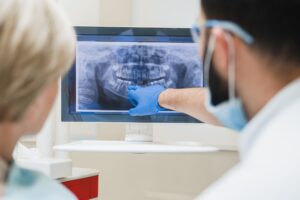
- 3D imaging and digital analysis
- Bite and force evaluation
- Assessment of bone volume and density
- Prosthetic design before surgery
- Coordination with surgical placement for precision
Dr. Joon W. Park, DMD applies prosthodontic training to ensure implants, prosthesis, and bite function as a single system. Learn more about his background on the Dr. Joon W. Park profile.
Summary
All-on-4 and All-on-6 dental implants both restore a full arch with fixed teeth, but they differ in implant count, force distribution, bone requirements, and long-term durability.
All-on-4 focuses on efficiency and reduced bone requirements. All-on-6 emphasizes stability and load distribution. The right choice depends on your anatomy, bite, and long-term goals—not just the number of implants used.
For a precise evaluation and a treatment plan built around long-term success, schedule a consultation through the contact page.