

Many patients assume that losing one tooth is mostly a cosmetic issue. If the missing tooth is toward the back of the mouth, some people delay treatment for years because the gap is not immediately visible.
At JP Prosthodontics in Fullerton, CA, patients are often surprised to learn that even a single missing tooth can trigger a chain reaction affecting the jawbone, bite, surrounding teeth, and long-term oral health.
This guide explains what really happens when a missing tooth is left untreated and why early replacement often prevents more complex dental problems later.
Bone Loss Begins Soon After Tooth Loss
Natural tooth roots stimulate the jawbone every time you chew. Once a tooth is removed, that stimulation stops. The body responds by gradually shrinking the unused bone in that area.
Bone loss after tooth extraction:
- Begins within the first few months
- Continues progressively over time
- Can reduce both bone height and width
- May eventually affect facial support and appearance
The longer a tooth is missing, the more difficult future replacement can become because there may not be enough bone to support an implant without grafting.
This is one reason dental implants are often recommended—they replace the root as well as the visible tooth and help preserve bone stimulation.
Neighboring Teeth Start to Shift
Teeth are designed to support each other in a balanced arch. When one tooth disappears, nearby teeth begin moving into the empty space.
Common changes include:
- Tilting toward the gap
- Rotation or twisting
- Changes in spacing
- Food traps between teeth
These movements may seem minor at first but can eventually affect your bite alignment and increase the risk of decay or gum disease around crowded or tilted teeth.
Opposing Teeth Can Over-Erupt
If a tooth is missing from one arch, the tooth directly above or below it no longer has an opposing surface to bite against.
Over time, that tooth may:
- Drift downward or upward into the empty space
- Become more exposed or loose
- Create bite interference
- Increase wear on surrounding teeth
This process is called super-eruption or over-eruption, and it complicates future restorative treatment.
Bite Problems Develop Gradually
Even a single missing tooth changes how forces move through the mouth. The remaining teeth begin compensating for the lost support.
Possible consequences:
- Uneven chewing patterns
- Increased pressure on surrounding teeth
- Tooth wear and fractures
- Jaw muscle fatigue
- Bite imbalance over time
At JP Prosthodontics, implant planning includes bite analysis because long-term success depends on restoring force balance—not simply filling a gap.
Increased Risk of Gum Disease and Decay
Open spaces are harder to keep clean than many patients expect. Shifting teeth and altered bite patterns create areas where plaque and food collect more easily.
Long-term risks include:
- Gum inflammation
- Bone loss around neighboring teeth
- Higher cavity risk between tilted teeth
- Chronic food impaction
A single untreated gap can eventually contribute to multiple dental problems throughout the area.
Changes in Facial Appearance
Tooth loss affects more than the smile. Bone shrinkage changes the structure supporting the lips and cheeks.
Potential facial changes over time:
- Sunken appearance around the mouth
- Premature aging in the lower face
- Reduced lip support
- Collapsed facial profile in severe cases
These changes become more pronounced with multiple missing teeth or long-term denture wear.
Difficulty Chewing Certain Foods
Patients often adapt gradually without realizing how much their chewing efficiency has changed.
Common signs:
- Avoiding harder foods
- Chewing mostly on one side
- Reduced ability to break down food properly
- Jaw soreness after meals
Over time, uneven chewing increases stress on the remaining teeth and may accelerate wear.
Speech Changes Can Occur
Certain teeth play an important role in pronunciation and airflow during speech. Missing teeth—especially front teeth—can alter the way sounds are formed.
Patients may notice:
- Whistling during speech
- Difficulty pronouncing certain sounds
- Changes in tongue positioning
Speech problems are more common when multiple teeth are missing but can occur even with a single tooth gap in critical areas.
Replacing a Missing Tooth Early Is Usually Simpler
Delaying treatment often increases complexity and cost later.
Early replacement typically means:
- More bone available for implants
- Simpler treatment planning
- Fewer bite complications
- Reduced need for grafting or orthodontic correction
When replacement is delayed for years, additional procedures may be necessary before restoration becomes possible.
Dental Implants: Why They Are Often Preferred
Among tooth replacement options, dental implants are unique because they replace both the visible tooth and the root underneath.
Benefits of implants include:
- Bone preservation
- Stability during chewing
- No need to shave down neighboring teeth
- Long-term support for bite balance
For patients missing several teeth or all teeth, full mouth dental implants can restore full function with fixed, implant-supported teeth.
Other Replacement Options
Not every patient chooses implants immediately. Depending on the situation, alternatives may include:
- Traditional dental bridges
- Partial dentures
- Full dentures
- Implant-supported bridges
The best option depends on bone levels, gum health, bite forces, medical history, and long-term goals.
The Prosthodontic Perspective at JP Prosthodontics
At JP Prosthodontics in Fullerton, CA, missing tooth treatment is planned with long-term function in mind.
Evaluation includes:
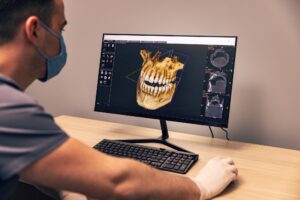
- 3D imaging to assess bone volume
- Bite and force analysis
- Examination of neighboring teeth and gums
- Assessment of long-term stability and wear patterns
Dr. Joon W. Park, DMD designs treatment around preserving oral structure and restoring balanced function rather than simply replacing visible teeth. Learn more on the Dr. Joon W. Park profile.
Summary
A missing tooth does not remain an isolated problem. Over time, untreated gaps can lead to bone loss, shifting teeth, bite changes, gum problems, and facial collapse.
The earlier replacement is planned, the more predictable and conservative treatment often becomes. Dental implants help preserve bone and stability, but every patient requires individualized evaluation to determine the right solution.
For a comprehensive assessment in Fullerton, CA, schedule a consultation through the contact page.